Choosing the best non-stick coating for electrosurgical tips is crucial. Surgeons need reliable tools for precision and safety. According to Dr. Emily Carter, a renowned surgical expert, "Selecting the right coating can enhance performance and patient safety." This emphasizes the importance of informed choices in medical technology.
Electrosurgical tips often face challenges like tissue adherence and thermal damage. The right non-stick coating can mitigate these issues effectively. But what is the best option? Various coatings exist, each with its pros and cons. Some offer superior durability, while others enhance thermal conductivity.
Many surgeons find it difficult to decide. The market is flooded with options, making it hard to determine which non-stick coating is best for electrosurgical tips. It's essential to weigh each choice carefully. Understanding the unique demands of surgical procedures can guide selection. Therefore, continuous research and expert opinions are invaluable for making the right decision.
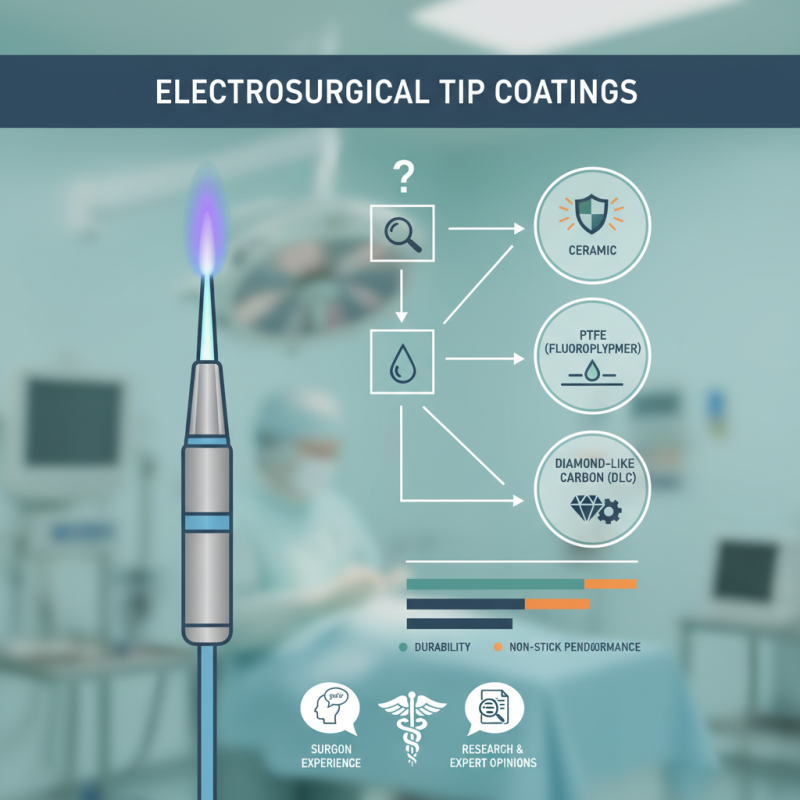
Best Non-Stick Coatings: Overview of Electrosurgical Tip Options
When considering the best non-stick coatings for electrosurgical tips, it's essential to understand the various options available. Non-stick coatings enhance the performance of these tools by reducing tissue adhesion, which ultimately leads to better surgical outcomes. This is especially critical in delicate procedures where precision is paramount.
Different coatings offer unique benefits. For example, ceramic-based coatings provide excellent heat resistance and durability. They tend to be more robust, reducing the frequency of replacements. Another option includes polymer coatings, renowned for their slick surface that minimizes tissue adherence. However, these coatings might wear over time and may require more frequent maintenance.
Choosing the right coating can significantly impact surgical efficiency. Factors such as heat conductivity, ease of cleaning, and durability need consideration. Surgeons often balance these aspects based on their specific needs. It's not uncommon to find some coatings that promise high performance but fail in practical settings. Understanding these limitations is crucial. Always assess the experiences shared by other professionals before making a decision.
Key Properties of Non-Stick Coatings in Electrosurgery Applications
In electrosurgery, the choice of non-stick coatings is crucial. These coatings directly impact the efficiency and safety of surgical procedures. Key properties include thermal stability, chemical resistance, and low friction. According to industry reports, non-stick coatings can reduce tissue adhesion by up to 70%. This is significant in minimizing thermal damage during surgeries.
Numerous studies highlight the need for reliable non-stick solutions. For instance, a 2021 review noted that advanced coatings improve operational longevity. Surgeons report fewer complications when using tools with optimized non-stick properties. However, the effectiveness of a coating can vary based on the surgical environment. Some coatings may not perform well under extreme temperatures or specific chemicals. This inconsistency calls for careful evaluation and testing.
While many new coatings show promise, not all achieve the desired outcomes. The material's adhesion strength can affect both ease of use and durability. Some coatings may wear off, compromising their non-stick properties over time. Users must pay attention to these factors when selecting the best coating for their needs. Regular assessments and updated substitutions might be necessary to maintain performance in the operating room.
Performance Comparison: Ceramic vs. PTFE Coatings for Surgical Tips
When selecting non-stick coatings for electrosurgical tips, a key decision lies between ceramic and PTFE coatings. Each material has unique qualities worth noting.
Ceramic coatings often boast excellent durability. They resist scratches and wear over time. This feature helps maintain their non-stick properties longer.
However, ceramic coatings can be brittle. A drop or impact may cause chips, which affects their performance.
PTFE coatings, on the other hand, are well-known for their smooth surface. They offer exceptional non-stick capabilities. This is beneficial in preventing tissue adhesion during surgeries.
However, PTFE can degrade under high temperatures, leading to a need for careful handling. Moreover, it may require replacements more frequently than ceramic options.
Surgeons must weigh the pros and cons carefully. Understanding how these coatings perform in real medical settings is essential. In some cases, a combination of both coatings could provide an optimal solution.
The choice should align with procedural demands and expected outcomes. Ultimately, performance and reliability in the surgical environment dictate the best choice, requiring thoughtful consideration.
Industry Standards and Regulations for Electrosurgical Tip Coatings
Electrosurgical tip coatings play a crucial role in medical procedures. The effectiveness of these coatings directly affects patient outcomes. Recent studies have shown that the non-stick properties of electrosurgical tips can reduce tissue adhesion by up to 50%. This statistic underscores the importance of selecting the right coating material in surgical environments.
Industry standards set by organizations like the FDA and ISO emphasize biocompatibility and durability for electrosurgical coatings. Regular updates in these standards reflect ongoing advancements in materials science. Compliance with these standards ensures that the coatings will not degrade under high temperatures, which could lead to unsafe practices. Reports suggest that coatings with higher thermal stability are associated with a 40% improvement in instrument lifespan.
Despite these advances, challenges remain. Some coatings may wear off after repeated use, compromising their effectiveness. Continuous research is needed to explore long-lasting solutions. Moreover, the lack of uniform testing protocols can lead to variability in quality among different manufacturers. This inconsistency makes it difficult for surgeons to make informed decisions based on reliable data. The healthcare community must work together to push for more stringent evaluations of electrosurgical tip coatings.
Impact of Non-Stick Coatings on Surgical Efficiency and Patient Outcomes
The selection of non-stick coatings for electrosurgical tips significantly impacts surgical efficiency and patient outcomes. Recent studies indicate that specific coatings can reduce tissue adhesion during procedures. In surgical environments, high adhesion can lead to increased operating times. A report from the International Journal of Surgery highlights that reducing thermal damage by 30% can improve recovery times for patients.
Some non-stick coatings can enhance tip longevity. This helps reduce the frequency of replacements. However, not all coatings are created equal. There are trade-offs to consider, such as the cost versus the potential for better surgical performance. A study from Surgical Endoscopy noted that even a minor improvement in efficiency could decrease overall costs by around 15% in high-volume surgeries.
Despite advances in coating technology, issues remain. Surgeons report that not all non-stick surfaces provide consistent performance. Variability in adherence can lead to unpredictability during procedures. This inconsistency requires careful consideration when selecting coatings. As surgical teams strive for improved outcomes, understanding these coatings' nuances becomes crucial. Balancing performance and reliability remains an ongoing challenge in surgical practice.
Conclusion
In the realm of electrosurgery, selecting the appropriate non-stick coating for surgical tips is crucial for optimizing performance and patient safety. The article delves into various non-stick coating options, focusing on key properties essential for electrosurgical applications. A comparison of ceramic and PTFE coatings highlights their respective advantages regarding thermal stability, durability, and ease of cleaning.
Furthermore, the article addresses industry standards and regulations that govern these coatings, ensuring they meet safety and effectiveness requirements. The impact of non-stick coatings on surgical efficiency and patient outcomes is emphasized, prompting the question: which non-stick coating is best for electrosurgical tips? By analyzing these factors, surgical professionals can make informed choices to enhance surgical procedures and improve patient care.

 Centuri Medical