How to Calibrate White Balance for Surgical Camera Systems?

Time:2026-06-13 Author:Isabella
0%

In the field of surgical imaging, precision is key. Understanding "How to calibrate white balance on a surgical camera system?" is crucial for enhancing visual quality during procedures. Dr. Emily Chen, an expert in surgical imaging, emphasizes the importance of accuracy. She stated, "Proper white balance calibration can significantly improve our ability to see critical details during surgery."

White balance calibration ensures that the colors in surgical images are true to life. This is vital for tissue identification and diagnosis. If the white balance is off, surgeons may misinterpret colors, leading to potential errors. The calibration process requires both technical skills and an understanding of the system. It can be challenging, even for experienced professionals.

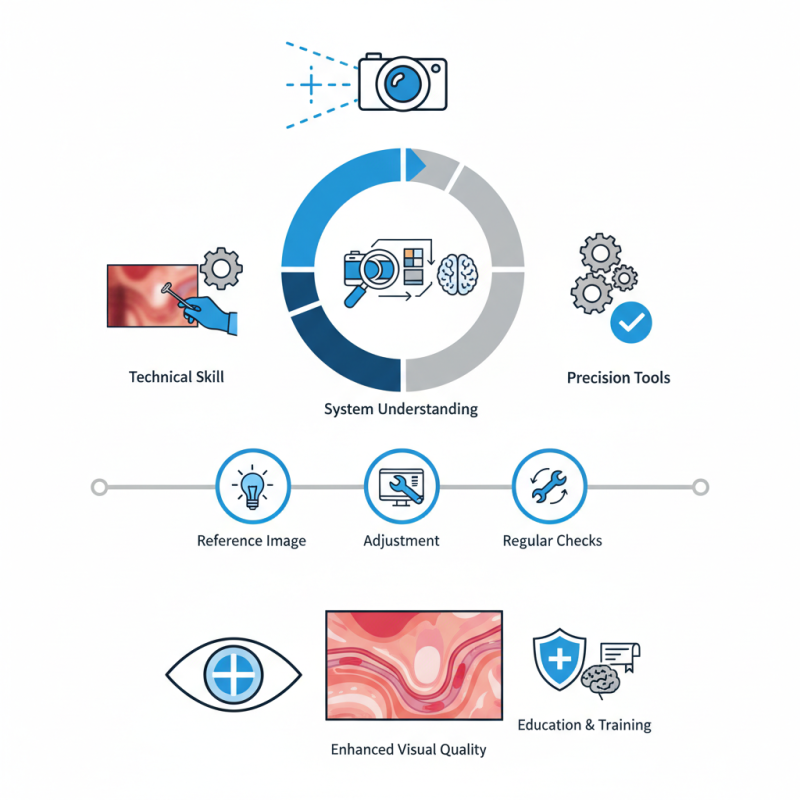
Many cameras have built-in tools for this process, but often they lack precision. It's essential to use reference images under standard lighting for a trustworthy calibration. Regular checks and adjustments are necessary. Experts like Dr. Chen remind us that any oversight in this process can have real consequences. Proper education and training in this area are necessary for all surgical staff to achieve optimal outcomes.
How to Calibrate White Balance for Surgical Camera Systems?

Understanding White Balance in Surgical Camera Systems

Understanding white balance in surgical camera systems is essential for achieving accurate color representation in the operating room. Surgical lighting can vary widely, often leading to color shifts that affect visualization. Proper calibration ensures that tissues and instruments are depicted in their true colors. This accurate representation helps surgeons make better decisions during procedures.

Lighting conditions are not always ideal. Ambient light, surgical drapes, and equipment can influence how colors appear on the camera. Therefore, understanding how to adjust white balance is crucial. Technicians should regularly assess lighting conditions and adjust the camera settings accordingly. A systematic approach, rather than a one-time setup, ensures reliability. Monitoring and tweaking settings may seem tedious, but it significantly enhances image quality.

A common oversight is assuming that automatic white balance will suffice for every scenario. While it works in many cases, it may not capture the specific nuances of surgical lighting. An experienced technician can often see these discrepancies. Recognizing the limitations of auto-adjustments can lead to better practices. Viewing images in post-processing can also reveal color inaccuracies that need addressing. This reflection fosters an environment of continuous improvement in surgical imaging.

Importance of Accurate White Balance in Surgical Imaging

Accurate white balance is crucial in surgical imaging, impacting diagnosis and treatment outcomes. Studies indicate that incorrect white balance can lead to misinterpretation of tissues. For example, a report by the Journal of Surgical Research found that over 30% of surgical errors were linked to imaging discrepancies. Clear visualization of anatomical structures relies heavily on color accuracy.

Achieving proper white balance is not always straightforward. Surgical lighting can be complex, with differing color temperatures. Improper calibration may obscure important details, leading to potential surgical complications. Emphasizing system checks and routine maintenance is essential to ensure image quality.

**Tips**: Test white balance regularly. Use calibration targets and tools to refine accuracy. Regular feedback sessions can help improve imaging protocols. Surgical teams should discuss discrepancies openly, ensuring everyone is on the same page. Continuous training can keep skills sharp and minimize errors, enhancing overall procedural success.

How to Calibrate White Balance for Surgical Camera Systems?

Parameter Value Unit Importance
Color Temperature 6500 K Standard for daylight
White Balance Mode Auto - Ensures adaptability to different lighting
Calibration Frequency Weekly - Maintains image accuracy
Reference Light Source LED - Provides consistency for calibration
Adjustment Range ±100 K Allows for fine-tuning to specific conditions

Step-by-Step Calibration Process for Surgical Cameras

Calibrating white balance for surgical cameras is crucial for accurate imaging. An improper balance can lead to misleading colors, affecting diagnoses and treatment decisions. The calibration process involves several key steps to ensure optimal performance.

Start by gathering essential tools, such as a color reference card and a gray card. Set up the camera under the lighting conditions used in your operating room. Take initial test images to analyze the current color output. Evaluate if there are any visible color casts. This review process is vital; discrepancies may not be obvious at first glance.

Next, adjust the camera's white balance settings. Use the gray card to set a neutral reference point. Capture another set of images to see if the changes improved accuracy. It's not uncommon to miss slight variations in color. A repeat of this step may be necessary. Continuously monitor images during procedures, as environmental factors can alter lighting. Maintaining an adaptable approach is key for consistent results.

Common Challenges in White Balance Calibration

Calibrating the white balance for surgical camera systems presents several challenges that need careful consideration. One common issue is the variability of lighting conditions in the operating room. Surgical lights can cast different color temperatures, causing images to appear warm or cool. This inconsistency can hinder accurate visualization of tissues and organs. Adjusting for this variability requires firsthand experience and a deep understanding of the equipment and environment.

Another challenge involves the use of different camera sensors, which may render colors differently. What looks neutral on one camera may appear skewed on another. This inconsistency can impact diagnostic accuracy and surgical outcomes. Regular calibration using standardized white balance targets can help, yet it relies heavily on the technician's expertise. Inadequate training can lead to poor calibration practices, resulting in misleading visualizations during critical procedures.

Moreover, reflections from surgical instruments add complexity to white balance calibration. These reflections can introduce unwanted color casts, complicating the task of achieving a true representation of the surgical field. Technicians must be vigilant and adaptable, continually assessing and adjusting for these interferences. Addressing these challenges requires a commitment to continual learning and refining processes to ensure optimal camera performance in high-stakes environments.

How to Calibrate White Balance for Surgical Camera Systems?

This chart illustrates common challenges associated with white balance calibration in surgical camera systems, including the influence of various lighting conditions and the ability to adjust settings effectively to achieve accurate color representation.

Best Practices for Maintaining White Balance in Operating Rooms

Maintaining proper white balance in operating rooms is crucial for optimal surgical outcomes. Without accurate color representation, surgeons may struggle to identify tissues and blood vessels accurately. Natural lighting is often absent in these controlled environments, leading to potential color distortion. Regular assessments of the light sources, including overhead lights and monitors, are essential to ensure consistency.

For optimal results, a calibration routine should be established. Use gray cards to assess and adjust white balance settings. This method helps provide a baseline reference under the specific lighting conditions present in the operating room. Additionally, environmental factors can change unexpectedly, affecting the camera's performance. Regularly retraining staff on calibration practices can help foster a culture of precision.

Despite best efforts, achieving perfect white balance can be challenging. Variations in color temperature from different light sources can lead to discrepancies. Surgeons may notice subtle shifts in color during procedures, affecting their confidence. Continual improvement and feedback loops can enhance the reliability of these systems, promoting better understanding and navigation in surgical environments. Regular reviews of white balance processes and techniques can lead to valuable insights.

FAQS

: What challenges are faced during white balance calibration in surgical cameras?

: Variability of lighting conditions can cause images to appear warm or cool, complicating visualization.

How do different camera sensors affect color representation?

Different sensors can render colors inconsistently, impacting diagnostic accuracy and surgical outcomes.

Why is technician training important for white balance calibration?

Inadequate training can lead to poor calibration practices, resulting in misleading images during procedures.

What complicates white balance calibration in the operating room?

Reflections from surgical instruments can introduce unwanted color casts, making accurate calibration difficult.

How can technicians maintain white balance in dynamic environments?

They must continually assess lighting conditions and be adaptable to changes in the surgical setting.

What best practices aid in maintaining proper white balance?

Regular assessments of light sources and using gray cards for calibration routines are essential.

What should staff regularly retrain on in operating rooms?

Staff should be retrained on calibration practices to foster precision and consistency.

Why might surgeons struggle with color identification during surgery?

Without accurate white balance, subtle shifts in color can affect their ability to identify tissues accurately.

How can feedback improve white balance systems?

Continual feedback and process reviews can lead to insights and enhance reliability in surgical environments.

Is achieving perfect white balance always possible?

No, variations can occur, and achieving perfect calibration remains a challenge despite best efforts.

Conclusion

In the realm of surgical imaging, understanding and calibrating white balance is crucial for capturing accurate and clear visuals. This article addresses the question of "How to calibrate white balance on a surgical camera system?" by outlining a comprehensive step-by-step calibration process. It emphasizes the importance of precise white balance for enhancing image quality and ensuring optimal performance in surgical settings.

The article also discusses common challenges faced during white balance calibration and offers best practices to maintain consistent white balance within operating rooms. By following these guidelines, surgical teams can improve their imaging results, ultimately contributing to better patient outcomes and more effective surgical procedures.

Isabella

Isabella

Isabella is a dedicated marketing professional with a sharp focus on driving brand growth and engagement through strategic content creation. With an extensive background in digital marketing, she combines her passion for storytelling with her keen understanding of industry trends to deliver......