How Long Does a CMOS Endoscope Camera Last? The answer is less definite than many buyers expect. No universal industry report assigns one fixed service life to every CMOS endoscope camera. Actual durability depends on sensor quality, operating hours, sterilization exposure, cable movement, impact, and maintenance discipline. A camera used twice weekly faces different stress from one used continuously in a busy operating room.
So, what is the average lifespan of a CMOS endoscope camera? In practical hospital settings, many systems remain usable for approximately three to seven years, although this range is an informed service expectation, not a guaranteed standard. Manufacturers usually define performance limits through warranty terms, inspection criteria, and replacement recommendations. The U.S. FDA’s Reprocessing Medical Devices in Health Care Settings guidance emphasizes validated cleaning, disinfection, and sterilization instructions, because incorrect processing can damage equipment and create patient-safety risks. AAMI ST91:2021 also stresses documented inspection, maintenance, and reprocessing controls for flexible and semi-rigid endoscopes.
The sensor may still produce an image after several years. That does not mean the camera remains clinically reliable. Look for dark pixels, color drift, intermittent video, fogging, connector corrosion, or a cable that feels stiff near the camera head. Small warning signs matter. IEC 60601-1 addresses essential medical electrical safety, but it does not promise a universal camera lifespan. Therefore, replacement decisions should combine usage records, image-quality testing, repair history, and the manufacturer’s instructions for use. I may be too cautious, but relying only on calendar age can hide expensive failures waiting inside a familiar-looking device.
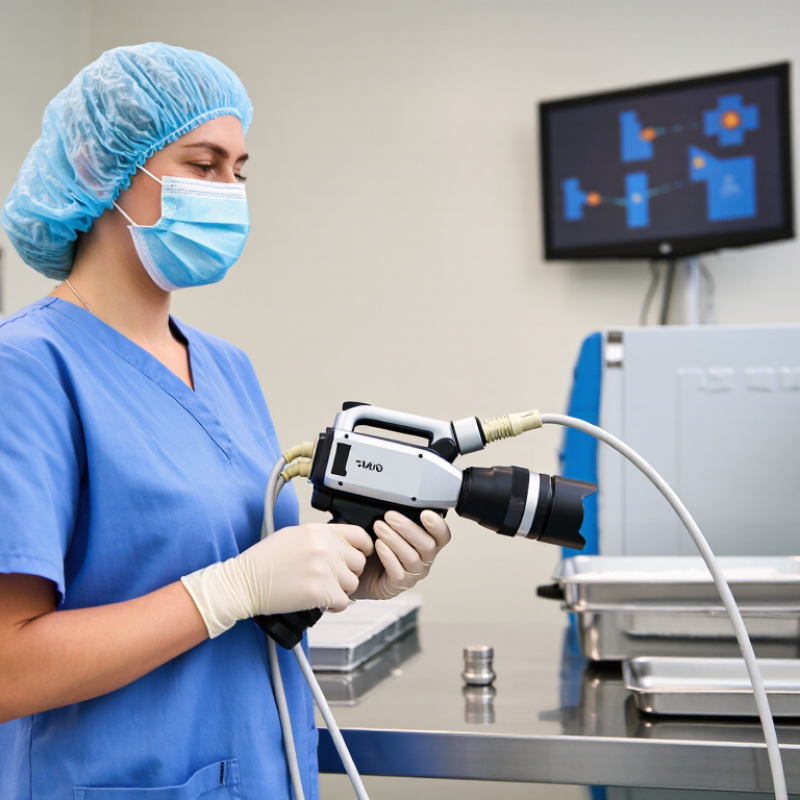
How Long Does a CMOS Endoscope Camera Last?
What Determines the Lifespan of a CMOS Endoscope Camera
A CMOS endoscope camera has no universal expiration date. Its service life depends on operating hours, heat, moisture, sterilization, and handling. In clinical service, technicians often find cable damage before sensor failure. Repeated bending near the connector is especially destructive.
Heat accelerates electronic aging. Continuous operation beside a powerful light source can raise internal temperatures. Moisture is also dangerous. IEC 60529 defines IP67 protection as resistance to temporary immersion, not unlimited exposure. A sealed housing can still fail after repeated cleaning, pressure changes, or damaged seals.
Reprocessing practices matter greatly. AAMI ST91:2021 recommends inspection, leak testing, cleaning, and complete drying for reusable endoscopes. These steps protect more than patient safety. They also reduce corrosion around the sensor, connector, and circuit board. The FDA’s Reprocessing Medical Devices guidance requires validated instructions, but it does not promise a fixed camera lifespan.
Manufacturers commonly rate equipment by operating hours or duty cycles, yet those figures require careful interpretation. A camera used two hours daily faces a different load than one used continuously. A 2024 global endoscopy market report from Grand View Research projects strong market growth, but market growth does not prove longer device life. That distinction is easy to miss.
In practice, image noise, color drift, intermittent signals, and delayed startup are useful warning signs. Performance may decline gradually. My own assessment would not rely on age alone. A five-year-old camera with dry storage may outperform a newer unit exposed to poor reprocessing. That is inconvenient, but probably more realistic.
It often lasts five to eight years in controlled clinical use. Careful handling and dry storage matter. The cable may fail before the sensor.
Yes. Daily high-volume use may reduce practical life to three or five years. Repeated bending near the camera head causes hidden cable fatigue.
Heat, moisture, chemicals, vibration, and pressure cycles can damage seals and image stability. Harsh environments shorten service life quickly. Small exposure still matters.
Wipe the housing with an approved cleaning solution. Never spray liquid directly onto the lens or electrical port. Follow the stated cleaning limits carefully.
Inspect it for cracks, flattened sections, and loose connectors. Store it in a wide, gentle loop. Avoid tight coils and heavy objects.
Watch for image noise, color drift, dead pixels, flicker, motion lag, or uneven brightness. Compare new recordings with older images under identical lighting.
Replacement becomes reasonable when faults return, image quality affects inspection, or compatible parts disappear. Do not wait for complete failure. That can disrupt procedures.
Sometimes. A worn cable or connector may be the real problem. Persistent sensor noise or unstable output usually requires replacement. Diagnosis is not always perfect.
A CMOS endoscope camera’s lifespan depends on image sensor quality, optical design, operating frequency, handling, sterilization methods, and exposure to heat, moisture, chemicals, and mechanical stress. Under normal clinical or industrial use, a well-maintained camera may remain reliable for several years, while heavy use, repeated bending, improper cleaning, or harsh environments can shorten its service life. What is the average lifespan of a CMOS endoscope camera? In general, it may last around three to seven years, although actual performance varies according to workload and maintenance.
Common replacement signs include declining image clarity, color distortion, intermittent signals, dead pixels, unstable lighting, moisture inside the camera, or damage to the cable and connector. Regular inspection, gentle cleaning with approved materials, proper drying, careful storage, and avoiding excessive force can help extend longevity. When evaluating an aging camera, compare image quality, connection stability, repair costs, compatibility, and operating requirements. Replacement is advisable when performance becomes unreliable, maintenance is no longer cost-effective, or the camera can no longer meet safety and imaging standards.

 Centuri Medical