Choosing a non-stick coating for electrosurgical tips requires more than comparing supplier prices. It requires clinical evidence, coating science, and controlled manufacturing.
Industry reports from Grand View Research and MarketsandMarkets describe continued growth in global electrosurgical device demand. Their findings reflect rising procedure volumes, advanced energy platforms, and stronger interest in reusable or performance-focused components. However, market growth does not prove that one coating performs best. It only increases the need for reliable testing.
Which non-stick coating is best for electrosurgical tips? In practice, fluoropolymer coatings, including PTFE-based systems, are often evaluated for low tissue adhesion and thermal resistance. Ceramic or composite coatings may offer improved hardness in demanding applications. Performance depends on tip geometry, activation power, tissue type, coating thickness, and sterilization cycles. A coating that releases cleanly during short activation may fail after repeated heating.
The details matter. Observe tissue drag, char buildup, discoloration, and coating wear under realistic conditions. Measure adhesion after repeated activation, not only on a new tip. Validate biocompatibility, sterilization compatibility, electrical insulation, and coating adhesion through documented protocols. ISO 13485 quality systems and ISO 10993 biological evaluation provide useful frameworks, but certification alone does not replace product-specific testing.
China has capable coating manufacturers and strong precision-processing capacity. Still, supplier claims need evidence. Request sample records, batch traceability, coating thickness data, and accelerated-life results. No single material wins every application. That is the uncomfortable part. The best choice may be a validated coating system, not the most famous chemical name.
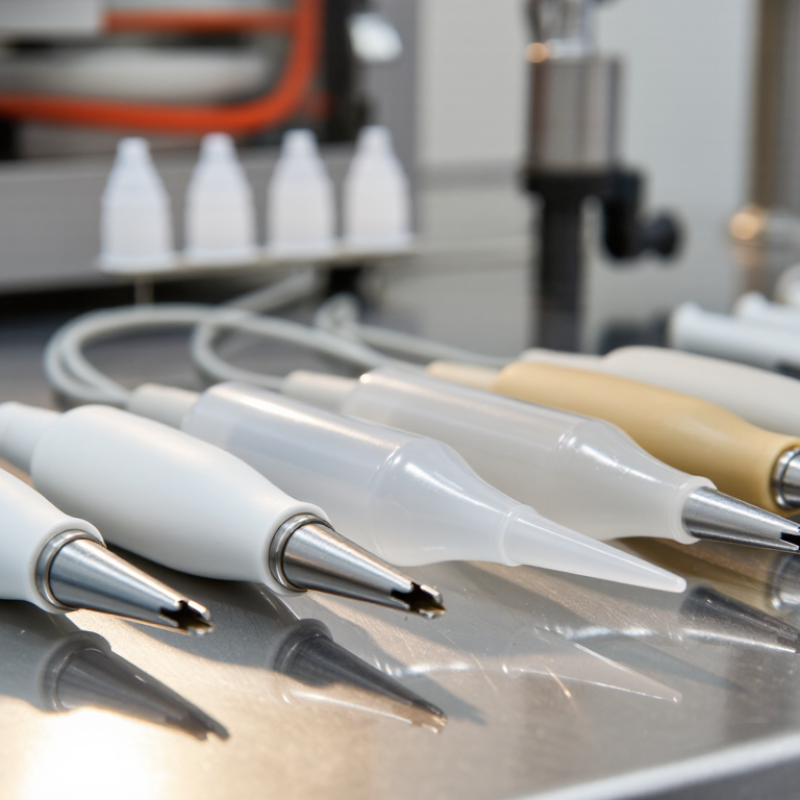
China Top Non Stick Coating for Electrosurgical Tips?
Electrosurgical Tip Coatings: PTFE, Parylene, and Ceramic Technologies
Electrosurgical tip coatings must control tissue adhesion, heat transfer, and repeated cleaning. No coating wins every test. Grand View Research estimates the global electrosurgical devices market will grow steadily through 2030. That growth increases pressure for dependable tip performance.
PTFE offers very low friction and strong release behavior. It suits surfaces that contact tissue during cutting or coagulation. However, PTFE can lose performance after repeated thermal cycling. Parylene creates a thin, conformal barrier around complex geometries. It also supports electrical insulation and moisture resistance. Its weakness is possible damage from sharp edges, abrasion, or aggressive handling. The coating may look intact but still contain microscopic defects.
Ceramic coatings tolerate higher temperatures and can provide strong hardness. They may resist scratching better than softer polymer films. Yet, excessive thickness can affect tip geometry and heat response. Brittle layers also deserve careful inspection. According to industry testing guidance, manufacturers should evaluate adhesion, dielectric strength, cytotoxicity, and aging under ISO 10993 and ISO 14971 frameworks. Laboratory data should include real tissue models, not only dry-metal tests. That detail is often overlooked. In practice, the best choice depends on tip shape, energy settings, cleaning cycles, and intended service life. I would not select a coating from market size alone. Small process differences can change clinical behavior.
| Evaluation Dimension | PTFE Coating | Parylene Coating | Ceramic Coating |
|---|---|---|---|
| Coating type | Fluoropolymer with low surface energy | Conformal polymer deposited in a vapor phase | Inorganic or hybrid ceramic-based protective layer |
| Typical coating thickness | Approximately 10–50 μm, depending on formulation and application method | Approximately 5–25 μm; thickness is highly uniform on complex geometries | Approximately 10–100 μm, depending on deposition process and coating architecture |
| Non-stick performance | Excellent; very low surface energy helps reduce tissue adhesion and char buildup | Very good; smooth, chemically inert surface can reduce adhesion when properly engineered | Good to very good; performance depends strongly on surface roughness and top-layer chemistry |
| Approximate coefficient of friction | Typically about 0.04–0.10 under dry sliding conditions | Typically about 0.04–0.08 for common conformal grades | Commonly about 0.20–0.70; highly dependent on composition and finish |
| Thermal capability | Useful for many short electrosurgical pulses; prolonged exposure above approximately 260°C can cause degradation | Good for controlled thermal exposure; grade, thickness, pulse duration, and substrate temperature are critical | Generally the strongest option for high-temperature resistance, although thermal-shock behavior must be evaluated |
| Electrical insulation | Very good dielectric insulation; often selected where electrical isolation is required | Excellent dielectric insulation with low moisture absorption | Generally good, but dielectric behavior varies widely with porosity, composition, and coating thickness |
| Conformality on complex tips | Moderate; edges, recesses, and sharp features may require careful pretreatment and process control | Excellent; vapor deposition can coat edges, recesses, lumens, and three-dimensional surfaces uniformly | Moderate to good; line-of-sight processes may produce thickness variation on complex geometries |
| Abrasion resistance | Fair to good; soft compared with ceramic layers and vulnerable to sharp mechanical damage | Good for light handling and low-load contact; may wear under aggressive mechanical abrasion | Very good when well bonded; brittleness and chipping must be controlled |
| Chemical resistance | Excellent resistance to most chemicals used in medical processing | Excellent resistance to moisture and many chemicals; formulation-specific validation is required | Generally excellent; some compositions may be affected by strong acids, bases, or thermal cycling |
| Bonding and pretreatment | Usually requires cleaning, surface activation, primer, or mechanical preparation | Requires a clean, compatible substrate; adhesion promoters or plasma treatment may be used | Requires controlled surface preparation and carefully matched thermal-expansion behavior |
| Typical application suitability | General-purpose non-stick electrosurgical tips, especially where low friction and chemical resistance are priorities | Complex-shaped tips and components requiring uniform insulation and conformal coverage | High-wear or high-temperature applications where polymer durability may be insufficient |
| Main advantages | Lowest friction, strong non-stick behavior, broad chemical resistance, and established processing methods | Highly uniform coverage, excellent insulation, low moisture uptake, and good protection of intricate geometries | High hardness, strong wear resistance, and superior high-temperature potential |
| Main limitations | Can creep, scratch, or degrade during excessive thermal exposure; adhesion is process-sensitive | May be less suitable for severe abrasion or repeated direct scraping; thermal limits vary by grade | Potential brittleness, edge chipping, higher process complexity, and less consistently low friction |
| Sterilization considerations | Compatibility depends on coating grade and sterilization cycle; repeated high-temperature cycles require validation | Often compatible with common low-temperature sterilization methods; repeated-cycle testing is essential | Usually resistant to heat, but sterilization validation must confirm adhesion and resistance to thermal shock |
| Overall selection profile | Best starting option when maximum non-stick performance and low friction are the primary goals | Best for conformal insulation and intricate tip geometries requiring consistent coverage | Best when high temperature and abrasion resistance outweigh the need for ultra-low friction |
It should reduce tissue adhesion, manage heat transfer, and survive repeated cleaning cycles. No coating wins every test.
PTFE provides very low friction and strong release behavior during cutting or coagulation. Thermal cycling may reduce its performance.
Parylene forms a thin, conformal barrier around complex tip shapes. It can support electrical insulation and moisture resistance.
Sharp edges, abrasion, and rough handling may create defects. The surface can look intact while microscopic damage remains.
Ceramic layers tolerate high temperatures and can resist scratching better than softer polymer films. Excessive thickness may change heat response.
Testing should examine adhesion, dielectric strength, biological safety, and aging. Real tissue models matter.
Review coating batches, surface preparation, curing temperature, thickness, and adhesion results. Small record gaps can become serious during activation.
No. A valid certificate cannot prevent process drift between production lots. Request samples and compare results after repeated activation.
Thickness should match the tip geometry, energy settings, and intended service life. Too much coating can affect heat response.
Audit process controls, inspect curing records, and conduct simulated-use testing. Some uncertainty remains. That deserves honest discussion.
Selecting the right coating for electrosurgical tips requires balancing nonstick performance, electrical insulation, biocompatibility, and long-term durability. PTFE, Parylene, and ceramic technologies each offer different advantages: PTFE can provide strong release properties, Parylene offers uniform conformal coverage and dielectric protection, while ceramic coatings may deliver high hardness and resistance to thermal and mechanical wear. Which non-stick coating is best for electrosurgical tips? The answer depends on the electrode material, operating frequency, power level, sterilization method, and expected service life.
At frequencies between 300 kHz and 1 MHz, coating evaluation should focus on reduced tissue adhesion, dielectric strength, thermal stability, and resistance to cracking or delamination. A qualified China-based supplier should demonstrate controlled manufacturing and compliance with ISO 13485, relevant ISO 10993 biological evaluation requirements, and applicable IEC 60601-2-2 provisions. Buyers should also verify coating thickness, surface uniformity, sterilization resistance, adhesion testing, and repeated-use cycle performance before selecting a production solution.

 Centuri Medical