Why Use Heated CO2 for Laparoscopy Insufflation?

Time:2026-09-22 Author:Liam
0%

Why use heated CO2 for laparoscopy insufflation? The question deserves more than a simple claim about comfort. During laparoscopy, cold, dry carbon dioxide enters the abdominal cavity through a narrow cannula. It can chill the peritoneal surface, increase evaporative fluid loss, and contribute to visible fogging on the laparoscope. Heated and humidified CO2 aims to make the insufflation gas closer to physiological conditions.

Professor Daniel J. Scott, a respected laparoscopic surgery educator, has stated, “The patient’s physiology must guide pneumoperitoneum, not the machine’s settings.” This principle remains important. Heated CO2 may help limit local cooling and reduce thermal stress, while humidification can protect exposed tissues from excessive dryness. In practice, the difference may appear as clearer optics, less condensation, and a more stable operating field. Small details matter.

However, heated CO2 is not a universal solution. Evidence varies between procedures, devices, and patient groups. Temperature control, filtration, flow rate, and pressure still require careful monitoring. A warmer gas cannot compensate for excessive intra-abdominal pressure or poor surgical technique. That is easy to forget.

The best clinical decisions combine published evidence, equipment validation, and direct patient observation. Surgeons should assess recovery, pain, core temperature, and operative visibility rather than relying on marketing language. More research is still needed, especially for long procedures and medically complex patients. Heated CO2 may offer meaningful advantages, but its value depends on disciplined use, appropriate settings, and realistic expectations.
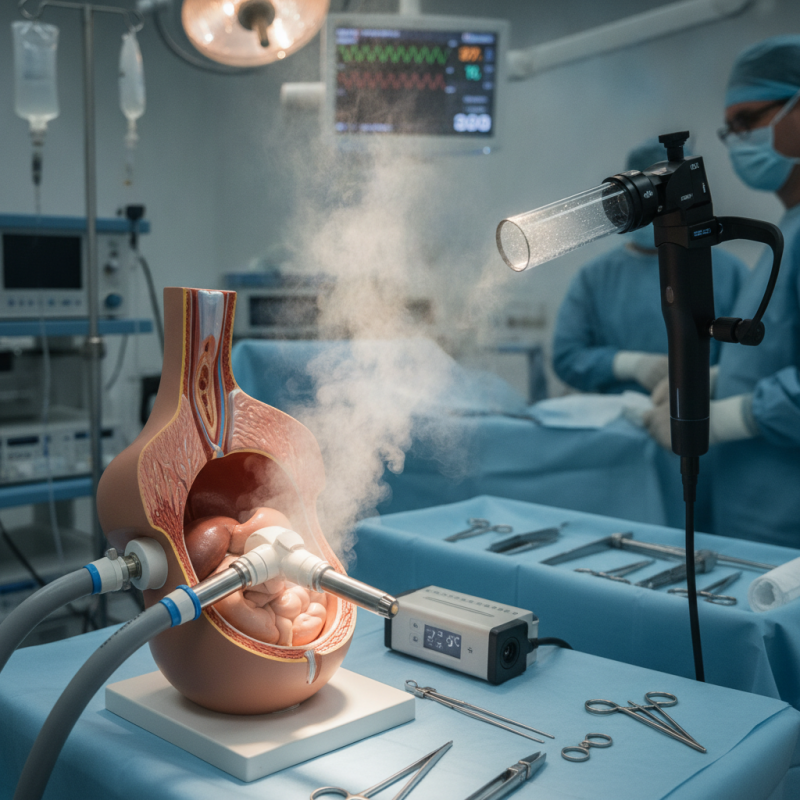
Why Use Heated CO2 for Laparoscopy Insufflation?

Physiological Effects of Heated CO₂ During Laparoscopy

Why Use Heated CO2 for Laparoscopy Insufflation?

Physiological Effects of Heated CO2 During Laparoscopy

During laparoscopy, carbon dioxide expands the abdomen and creates working space. Standard gas can be cold and dry. This exposure may cool the peritoneal surface and increase local tissue irritation. Heated CO2 more closely matches body temperature. It may reduce heat loss, postoperative shivering, and discomfort linked to cold gas.

The effect is not merely thermal. Warmed gas may limit drying of exposed tissues and support a more stable abdominal environment. Some patients report less shoulder-tip pain and reduced early recovery discomfort. However, results vary between studies and patients. The benefit is not guaranteed. Surgical duration, gas flow, irrigation fluids, and individual sensitivity also influence recovery.

CO2 is still absorbed through the peritoneum. Blood levels can rise, producing hypercapnia, respiratory acidosis, and changes in heart rate or blood pressure. Heating the gas does not remove these physiological demands. Anaesthesia teams should monitor end-tidal CO2, ventilation, temperature, and cardiovascular responses throughout the procedure. Small technical details matter, including correct humidification and avoiding excessive gas temperature. Warmer is not always better. In my view, heated CO2 is best considered a supportive measure, not a substitute for careful anaesthetic management, gentle tissue handling, and active temperature control. More consistent research is still needed.

How Heated CO₂ Influences Patient Comfort and Recovery

Why Use Heated CO2 for Laparoscopy Insufflation?

Heated CO₂ can make laparoscopy feel less like a cold, dry procedure. Standard gas may cool the peritoneal cavity and irritate tissues. Warmed, humidified CO₂ helps limit that thermal stress. Patients may experience less shoulder-tip pain, throat dryness, and postoperative shivering. These details matter during the first night, when small discomforts can delay sleep and movement.

Evidence remains encouraging, but not perfectly consistent. Systematic reviews of randomized trials have reported modest pain reductions, often around 0.5 to 1 point on a 10-point scale during the first 24 hours. A review published in Surgical Endoscopy also found lower early postoperative discomfort with heated, humidified gas. ERAS Society recommendations support measures that reduce pain and nausea while encouraging earlier mobilization. Still, heating alone does not guarantee faster recovery. Surgical duration, opioid use, nausea, and individual sensitivity also influence outcomes. That caveat matters.

Tips: Confirm the target temperature and humidity before insufflation. Monitor the patient’s core temperature, pain score, and shivering. Use warmed gas as one part of a broader recovery plan. Ask patients about shoulder pain specifically; some mention it only after direct questioning. The benefit can be subtle. In practice, comfort improvements may be real, but they are not always dramatic.

Potential Benefits for Surgical Visibility and Operating Conditions

Why Use Heated CO2 for Laparoscopy Insufflation?

Heated CO2 can improve the visual environment during laparoscopy. Gas entering the abdomen at near-body temperature may reduce thermal shock on the laparoscope lens. This can limit condensation, especially when a cool scope enters a warm, humid cavity. A clearer lens means fewer cleaning interruptions and steadier hand movements. The difference is tangible.

Operating conditions may also feel more controlled. Standard insufflation commonly uses intra-abdominal pressures around 12–15 mmHg, while cold, dry gas can contribute to evaporative heat loss. Heated gas may reduce that thermal burden, particularly during longer procedures. However, temperature alone is not the whole answer. Humidity, flow rate, trocar leakage, and room temperature also influence visibility and patient comfort.

The evidence remains mixed. A Cochrane Database of Systematic Reviews analysis identified 12 trials and reported low- or very-low-certainty evidence for meaningful improvements in postoperative pain, recovery, or hospital stay with heated and humidified CO2. Some clinical studies observed less lens fogging and better perceived operating conditions, but these findings were inconsistent. Not always. Surgeons should avoid treating heated insufflation as a guaranteed visibility solution. Device calibration, sterile workflow, and direct observation still matter. The remaining evidence gap deserves more standardized trials, especially those measuring fogging events, camera cleaning frequency, and procedure time.

Safety Factors and Limitations of Heated CO₂ Insufflation

Why Use Heated CO2 for Laparoscopy Insufflation?

Safety Factors and Limitations of Heated CO₂ Insufflation

Heated CO₂ may reduce heat loss during laparoscopy, especially during long procedures. Dry, cool gas can contribute to peritoneal cooling and postoperative discomfort. Warmed and humidified gas may also lessen tissue drying. The effect is not always dramatic. Patient temperature, room conditions, irrigation fluids, and operating time still matter.

Safety requires close control of gas temperature and intra-abdominal pressure. Excessive heat can injure tissues, while faulty sensors may provide false reassurance. The insufflator should display stable readings and trigger alarms when limits change. Surgical teams should check tubing, filters, and connections before use. Small equipment errors can have serious consequences.

CO₂ absorption can increase carbon dioxide levels, heart rate, and ventilatory demand. Patients with limited cardiopulmonary reserve may need tighter monitoring. Heated gas does not remove risks from pressure, anesthesia, or prolonged positioning. It also cannot replace active warming and careful fluid management. The benefits remain variable across studies and patients. A warmer abdomen sounds helpful, but it is not automatically safer. Good judgment still depends on measured temperature, pressure, ventilation, and the patient’s response.

Why Use Heated CO₂ for Laparoscopy Insufflation? - Safety Factors and Limitations of Heated CO₂ Insufflation
Safety or Clinical Factor Potential Benefit of Heated CO₂ Important Limitation or Risk Practical Safety Consideration
Patient comfort
Peritoneal temperature
Warming the insufflation gas may reduce the temperature difference between the gas and the abdominal tissues. This can help limit intraoperative cooling and may improve comfort during recovery. Clinical studies have not shown a consistent, substantial reduction in postoperative pain or nausea for every patient. Benefits may depend on the procedure, gas flow, humidity, and warming method. Use heating designed for laparoscopic insufflation and follow the device’s validated temperature range rather than applying external heat directly to the tubing or patient.
Temperature control
Prevention of thermal injury
Controlled warming can reduce exposure to cold gas while maintaining a predictable insufflation temperature. Excessively heated gas can cause tissue injury, dry the peritoneal surface, or damage temperature-sensitive components. A sensor or controller fault can create a hazardous condition. Confirm temperature monitoring, alarm functions, calibration status, and automatic shutoff before use. Do not bypass alarms or use settings outside the manufacturer-validated range.
Insufflation pressure
Abdominal pressure
Heating does not replace pressure regulation, but it can be incorporated into a controlled insufflation system that maintains the selected intra-abdominal pressure. Heated CO₂ does not prevent complications caused by excessive pressure, including reduced venous return, impaired ventilation, cardiovascular stress, or tissue trauma. Use the lowest pressure that provides adequate visualization when clinically appropriate. Continuously observe pressure, flow, patient ventilation, and hemodynamic status.
Hypothermia
Heat loss during long procedures
Warming the gas may reduce one source of heat loss during prolonged pneumoperitoneum, particularly when relatively high gas flows are used. The effect is limited because heat loss also occurs through the operating-room environment, exposed skin, irrigation fluids, anesthesia, and evaporation. Combine gas warming with standard temperature management, including patient warming when indicated, core-temperature monitoring, and appropriate operating-room control.
Condensation
Fogging of the laparoscope
Warm, appropriately conditioned gas can reduce the temperature gradient that contributes to lens fogging when the laparoscope enters the abdominal cavity. Heating alone may not prevent fogging. Excessively dry gas can increase tissue desiccation, while excessive moisture may contribute to condensation elsewhere in the system. Use compatible gas-conditioning accessories when indicated, maintain a clean and warmed optical system, and avoid unvalidated combinations of heating and humidification equipment.
Humidification
Peritoneal drying
Heated systems may be paired with humidification to reduce drying of exposed peritoneal surfaces and potentially reduce evaporative heat loss. Heating alone does not humidify CO₂. Humidification systems can add complexity, require sterile fluid management, and may increase condensation if improperly controlled. Treat heating and humidification as separate functions. Verify fluid levels, sterility, tubing orientation, and compatibility with the insufflator before surgery.
Gas absorption
CO₂ uptake and elimination
Warming the gas may make the insufflation environment more physiologic, but it does not eliminate the need to manage absorbed CO₂. CO₂ absorption can produce hypercapnia, respiratory acidosis, increased minute ventilation requirements, and cardiovascular effects, especially during prolonged or high-pressure procedures. Monitor end-tidal CO₂, oxygenation, airway pressures, ventilation, and acid–base status when clinically indicated. Adjust ventilation and insufflation parameters as needed.
Fire and equipment safety
Heat source near the sterile field
A regulated heating module can provide controlled gas warming without exposing the patient to direct contact with a heating element. Any electrical heating component can create risks from malfunction, damaged cables, fluid ingress, or incorrect assembly. CO₂ itself is nonflammable, but the operative environment may contain flammable materials and energy sources. Inspect cables, connectors, tubing, and housings. Keep electrical components dry, use only compatible accessories, and follow operating-room fire-safety procedures.
Gas quality and filtration
Sterility and contamination control
A heated pathway can be integrated into a regulated insufflation circuit while preserving controlled gas delivery. Heating does not sterilize the gas pathway or remove particulate and microbial contamination. A contaminated or wet circuit can introduce avoidable risk. Use medical-grade CO₂, sterile or approved single-use components where required, appropriate filtration, and a leak-tested circuit. Never rely on temperature as a sterilization method.
Evidence and cost
Routine clinical use
Heated CO₂ may be useful when minimizing cold-gas exposure is a priority, such as during long procedures or in patients at risk of perioperative heat loss. Evidence for improved major clinical outcomes is mixed, and the equipment adds cost, setup time, maintenance requirements, and additional failure points. Select warming based on patient factors, procedure duration, institutional protocols, and available evidence. It should complement—not replace—standard monitoring and thermal management.

Clinical note: Heated CO₂ insufflation should be used only with appropriately maintained equipment and trained clinical personnel. Temperature, pressure, flow, ventilation, hemodynamics, and patient core temperature should be assessed according to the procedure and the patient’s condition.

Clinical Selection and Practical Use of Heated CO₂ Systems

Why Use Heated CO₂ for Laparoscopy Insufflation?

Clinical selection matters more than adding equipment. Heated CO₂ may help limit heat loss during prolonged laparoscopy, especially when large abdominal surfaces remain exposed. A 2021 systematic review in Surgical Endoscopy found that heated, humidified insufflation produced modest improvements in core temperature, usually below 0.5°C. The effect was not consistent across every trial. Evidence remains mixed.

For procedures lasting over two hours, patients with low body mass, or those already vulnerable to hypothermia, a heated CO₂ system can support active warming. NICE guidance recommends continuous temperature monitoring for longer operations, rather than relying on gas warming alone. Set pressure and flow according to the patient and surgical field. Check the basics. Confirm the outlet temperature, tubing connections, humidification chamber, and alarm function before insufflation. A practical temperature target often sits near 35–37°C, but local protocols should govern adjustments.

Heated gas does not replace forced-air warming, warmed intravenous fluids, or careful exposure control. That matters. A 2022 review of randomized laparoscopic trials reported possible reductions in postoperative shoulder pain and dry throat, but results varied by procedure and study quality. In daily practice, the strongest case is selective use, not routine use for every patient. I would also review condensation risks, visibility, and maintenance workload after each case. The technology is useful, but it is not a shortcut around thermal management.

Why Use Heated CO₂ for Laparoscopy Insufflation?

As CO₂ temperature rises from room temperature toward body temperature, its density decreases. This physical relationship supports the practical use of warmed gas to reduce exposure to cold insufflation gas during laparoscopy. Heating does not change the gas composition and should be selected together with appropriate pressure control, flow management, and—when clinically indicated—humidification.

Reference basis: CO₂ density values are calculated from the ideal-gas relationship at 1 atmosphere and rounded to three decimals. Actual operating-room values vary with pressure, temperature, equipment, and gas conditioning.

FAQS

How can heated CO₂ improve laparoscopic visibility?

Gas near body temperature may reduce lens condensation inside the warm abdominal cavity. A clearer lens can mean fewer cleaning interruptions. Not always.

Does heated CO₂ prevent all camera fogging?

No. Humidity, gas flow, trocar leakage, and room temperature also affect condensation. A heated system is not a guaranteed visibility solution. The evidence remains mixed.

Can heated CO₂ reduce heat loss during surgery?

It may reduce evaporative heat loss from cold, dry gas. The benefit may matter during procedures lasting over two hours. The temperature change is often modest.

Which patients might benefit from heated insufflation?

Consider it for long laparoscopic procedures, patients with low body mass, or those vulnerable to hypothermia. Patient factors should guide selection. Routine use may not be necessary.

What temperature is commonly used for heated CO₂?

Many protocols target approximately 35–37°C. Local guidance should control the final setting. Check the actual outlet temperature before insufflation.

Does heated CO₂ replace other warming methods?

No. Forced-air warming, warmed intravenous fluids, and limited exposure remain important. Heated gas is one supporting measure, not the whole plan. That matters.

What should staff check before using a heated CO₂ system?

Confirm tubing connections, the humidification chamber, outlet temperature, and alarm function. Inspect the system before gas enters the patient. Check the basics.

Is heated CO₂ proven to improve recovery and reduce pain?

Evidence for less pain, faster recovery, and shorter hospitalization remains low-certainty or inconsistent. Some studies report less shoulder pain or throat dryness. Other studies do not. I would avoid promising a clear postoperative benefit.

Conclusion

Why use heated CO2 for laparoscopy insufflation? During laparoscopic surgery, warming the insufflation gas may help reduce the temperature difference between the gas and the patient’s abdominal tissues. This can lessen heat loss, limit cold-related discomfort, and support more stable physiological conditions during and after the procedure. By potentially reducing postoperative shivering, shoulder discomfort, and abdominal irritation, heated CO2 may contribute to a smoother recovery and improved patient comfort.

Heated CO2 may also help maintain a clearer and more consistent surgical environment by reducing condensation on the camera lens and improving visibility in selected cases. However, it is not suitable for every patient or procedure. Temperature control, pressure monitoring, humidification, equipment compatibility, and careful clinical supervision remain essential to minimize risks. The decision to use a heated CO2 system should consider the operation’s duration, the patient’s condition, surgical requirements, and the available equipment. Proper setup and monitoring are necessary to ensure that any potential benefits are achieved safely.

Liam

Liam

Liam is a dedicated marketing professional with a profound expertise in the industry, where he excels at highlighting the unique advantages of our core products. With a keen understanding of market trends and consumer needs, Liam frequently updates our company’s professional blog, providing......