The global market for sleep study machines—primarily composed of Polysomnography (PSG) hardware, Home Sleep Apnea Testing (HSAT) devices, and multi-parameter cardio-respiratory monitors—has entered a phase of rapid technical evolution. Driven by an aging population, rising clinical awareness of Obstructive Sleep Apnea (OSA), and the integration of artificial intelligence (AI) in physiological signal analysis, the medical engineering industry is shifting from traditional, bulky desktop sleep laboratory equipment to ultra-compact, high-fidelity diagnostic arrays.
Currently, manufacturers and factories play a pivotal role in optimizing biosensor latency, wireless communication protocols, and patient comfort. Modern clinical sleep labs demand Type 1 PSG systems containing no fewer than 32 channels of EEG, EOG, EMG, ECG, nasal airflow, thoracic effort, and pulse oximetry. Simultaneously, the out-of-center sleep testing (OCST) sector relies heavily on Type 3 and Type 4 sleep study machines. These streamlined medical systems integrate multi-parameter analysis engines to record essential physiological signals without requiring overnight hospitalization, maximizing patient compliance and reducing diagnostic bottlenecks.
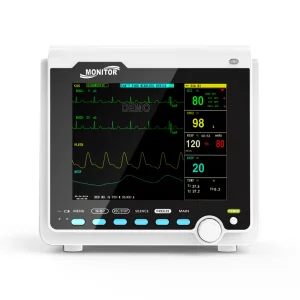
Leading clinical guidelines established by organizations like the American Academy of Sleep Medicine (AASM) dictate stringent thresholds for raw signal acquisition. Sleep study machine factories must implement low-noise amplifiers and high-resolution analog-to-digital converters (ADCs) to capture microvolt-level electroencephalographic signals. Furthermore, components must withstand sterilization, continuous patient contact, and the wear-and-tear of home transport environments. This intersection of mechanical durability and medical precision aligns closely with other high-tech clinical sectors, including minimally invasive endoscopy and ICU-grade patient monitors, where signal fidelity directly impacts therapeutic decision-making.
Modern devices combine thermistors and nasal pressure transducers to detect subtle hypopneas. Integration of photo-plethysmography (PPG) allows real-time calculation of pulse transit time (PTT) for non-invasive blood pressure estimations during sleep events.
Utilizing high-performance microprocessors to filter out ambient electric interference (50/60 Hz powerline noise) and patient movement artifacts, ensuring clean tracings of electrooculograms (EOG) and electromyograms (EMG).
By shifting computational loads to secure cloud infrastructure, diagnostic software leverages neural networks to automatically identify sleep micro-arousals, sleep stages (NREM/REM), and respiratory event markers with high specificity.
Zhejiang Centuri Medical Co., Ltd.
A High-Tech Enterprise Integrating R&D, Manufacturing, Sales, and Services
Zhejiang Centuri Medical Co., Ltd., is a high-tech enterprise that integrates research and development, manufacturing, sales, and after-sales services. The company is committed to innovation and production in the field of minimally invasive surgical instruments and medical products, providing advanced medical solutions for the global market.

Zhejiang Centuri Medical Co., Ltd. has established a research and production base of 20,000 square meters, which includes a 5,000-square-meter cleanroom and a 500-square-meter laboratory. The company is equipped with a comprehensive quality management system, advanced manufacturing equipment, and highly automated production and testing processes, ensuring that every product meets international standards.
The company has successfully passed the "Medical Device Production Quality Control" and "Management Standard" system evaluations and has obtained ISO 13485 certification for the medical device quality management system. Our product portfolio includes disposable puncture devices, digital endoscopes, electrocautery surgical instruments, surgical staplers, and endoscopic imaging systems, all of which have obtained domestic registration certificates and EU CE certification, ensuring high-quality medical devices for global customers.
In the field of minimally invasive surgical instruments, Zhejiang Centuri Medical Co., Ltd. boasts a highly experienced R&D team and maintains long-term collaborations with renowned hospitals and clinical experts. We are dedicated to continuously developing medical products that are more suitable for minimally invasive surgeries, relying on technological innovation and the guidance of top clinical experts to bring groundbreaking technologies to the field of minimally invasive surgery.
To date, the company has obtained more than 50 core product patents, including both invention and utility model patents. These patents cover a wide range of innovative technologies in minimally invasive surgical instruments and related fields. Through continuous technological innovation and accumulation, the company has become a leader in the medical device manufacturing industry, both domestically and internationally.
Professional Team: We have a professional team with over 10 years of experience in surgical instruments R&D and manufacturing, capable of providing comprehensive market analysis, product customization, and technical support.
Procurement Services: Our strong regulatory affairs team will assist you throughout the local registration process and provide personalized support to ensure your products are quickly introduced to the market.
After-Sales Services: We offer continuous technical support, product training, and warranty services to ensure that our clients experience seamless product usage. Our after-sales service network spans the globe, providing assistance whenever needed.
Efficient Production: We have the capability for priority delivery and flexible production arrangements, allowing us to rapidly adjust production schedules to meet customer demands and ensure timely deliveries.
Fast Shipping: We have carefully selected shipping channels to ensure that products are delivered to customers quickly and reliably.
Best Prices: As the direct manufacturer of all internal processes, we are able to offer the most competitive prices, eliminating the middleman markup and ensuring that our clients enjoy the best value for money.
Customization Services: We offer OEM, ODM, custom brand design, and marketing planning services to help clients build their brands and expand their market presence.
Zhejiang Centuri Medical Co., Ltd. has a comprehensive distribution plan and marketing strategy, providing full support to partners and helping them establish a presence in the global medical device market. The company will continue to enhance technological innovation, improve product quality, and actively expand international business, aiming to become a global leader in the field of minimally invasive surgical instruments.

We offer high-quality product images and videos to help our customers showcase their products on their websites, enhancing brand visibility and market competitiveness. If you have any website development or marketing needs, Centuri Medical is your trusted partner.
Zhejiang Centuri Medical Co., Ltd. is always customer-oriented, focusing on technological innovation, high-quality products, and attentive after-sales service. With a strong foundation in the domestic market, we are actively expanding into international markets and contributing to global healthcare. We look forward to collaborating with you and advancing medical technology together for the betterment of human health.
The deployment of clinical sleep study machines depends heavily on geographic healthcare frameworks. In North America and Western Europe, clinical workflows have evolved toward a hybridized model. Here, hospitals act as centralized hubs for complex, comorbidity-heavy diagnostic studies (utilizing Type 1 PSG systems), while outpatient networks manage suspected OSA cases using home screening kits (Type 3 devices).
For manufacturing partners, this requires a dual approach to design and output. Devices designed for European Union markets must fully comply with Medical Device Regulation (MDR) certifications, highlighting post-market clinical follow-up (PMCF) strategies. In contrast, emerging markets in Asia-Pacific and Latin America prioritize cost-effective, multi-use diagnostic systems with integrated, offline auto-scoring engines that do not require continuous high-speed internet connections. By manufacturing multi-parameter patient monitors alongside specialized diagnostic equipment, factories can provide local healthcare systems with versatile devices that serve dual purposes: general patient monitoring in surgical wards and overnight diagnostic assessment in specialized sleep clinics.
 Centuri Medical